# Who Needs Water Base Coating Pakistan for Better Print Finishes 2027?
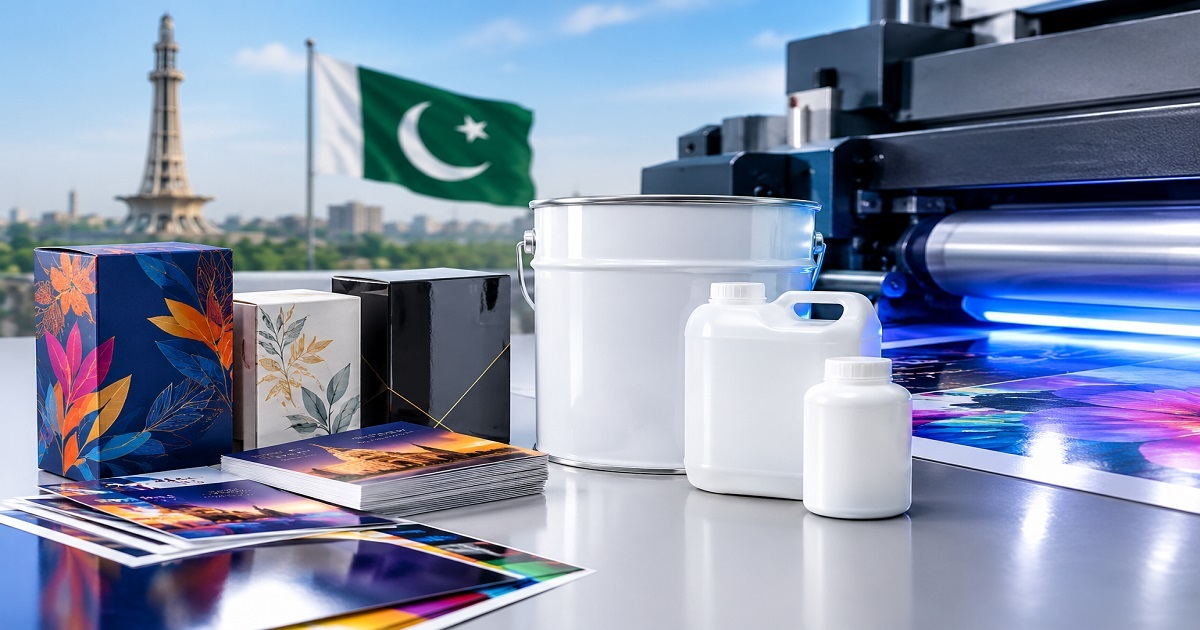
The printing industry in Pakistan continues to evolve as businesses look for better print quality, attractive finishes, and efficient production methods. ***[Water Base Coating Pakistan](https://springink.com/product-category/water-base-coating-pakistan/)*** is an important solution for printing companies that want to improve the appearance and protection of printed materials. This coating technology helps create a clean finish while supporting the production requirements of packaging manufacturers, commercial printers, publishing companies, and other businesses that depend on high-quality printed products.
## What Is Water Base Coating in Printing?
Water-based coating is a liquid finishing material applied to printed surfaces to improve their appearance and provide a degree of protection. It generally contains water as its primary carrier, along with resins, additives, and other ingredients designed to deliver specific performance characteristics.
Water-based coatings are commonly used in commercial printing and packaging applications because they can improve surface characteristics and support efficient production. Their performance depends on the coating formulation, application method, drying conditions, and the paper or board being used.
## Who Needs Water Base Coating Pakistan in 2027?
### Packaging Manufacturers
Packaging manufacturers are among the businesses that can benefit from water-based coating solutions. Product packaging must attract customers, communicate brand information, and withstand the handling that occurs during storage, transportation, and retail display.
Printed cartons, folding boxes, and paperboard packaging often require a finish that enhances color presentation while helping protect the printed surface from ordinary handling. Water-based coatings can provide these benefits when the formulation is suitable for the packaging material and intended application.
### Commercial Printing Companies
Commercial printers produce brochures, catalogs, flyers, corporate profiles, promotional materials, and other printed products. These materials often represent a company's brand, making presentation an important part of the final result.
Water-based coating can improve the surface appearance of suitable printed materials and help reduce everyday scuffing or marking, depending on the formulation. It may also contribute to a more uniform finish across large print runs.
### Publishing Houses and Book Printers
Publishing houses and book printers may also benefit from water-based coating, particularly when producing covers, educational materials, magazines, and selected printed inserts.
Book covers frequently experience friction during handling, stacking, transportation, and display. A suitable coating can help protect the printed surface and maintain its appearance during ordinary use.
### Label and Paper Product Manufacturers
Label producers and manufacturers of paper-based promotional products may need coatings that improve the appearance and handling performance of their printed materials.
Labels used on retail products must remain visually attractive while being processed, packed, transported, and displayed. Water-based coatings may help improve surface protection for certain paper labels, although moisture exposure, adhesive compatibility, and the intended end use must be evaluated carefully.
## How Water-Based Coating Improves Print Finishes
### Enhances Visual Appearance
The appearance of printed material can influence how customers perceive a product or brand. A suitable coating can improve surface uniformity and help produce a consistent finish across printed sheets.
### Provides Surface Protection
Printed materials may encounter friction, fingerprints, dust, and routine handling after leaving the press. A properly selected coating can help reduce certain types of surface damage and preserve the appearance of the printed design.
The level of protection varies according to the coating chemistry, film formation, drying conditions, and the characteristics of the printed substrate.
### Supports Production Efficiency
An appropriate coating can integrate into a printing workflow when the equipment, formulation, and drying system are compatible.
For printers handling high-volume packaging or commercial jobs, production efficiency depends on several factors, including drying speed, coating transfer, sheet handling, and compatibility with downstream processes.
### Offers an Alternative to Selected Finishing Methods
Water-based coating can be suitable for jobs where printers want to improve surface appearance without using certain other finishing methods.
It may be considered as an alternative to some varnishing or laminating applications, depending on the required appearance and durability. Nevertheless, these processes do not provide identical results.
## Why Pakistani Printing Businesses Are Considering Water-Based Coatings
### Growing Demand for Quality Packaging
Packaging has become an important part of product presentation across Pakistan's retail and manufacturing sectors. Businesses need printed cartons and other packaging materials that communicate brand identity while maintaining a professional appearance.
### Greater Attention to Environmental Considerations
Many businesses are reviewing their material choices and production processes to understand their environmental impact.
Water-based coatings use water as a primary carrier, which can offer advantages over some solvent-based systems. However, the environmental performance of a coating depends on its complete formulation, manufacturing process, energy consumption, waste management, and end-of-life treatment.
### Need for Consistent Production Quality
Printing companies often work with demanding delivery schedules and large orders. Variations in coating performance can affect drying, finishing, and the appearance of the final product.
A suitable water-based coating can help businesses achieve repeatable results when applied under controlled conditions.
## How to Choose the Right Water Base Coating Pakistan Supplier
### Evaluate Product Quality and Compatibility
The first step is to identify a supplier that understands the technical requirements of the printing operation.
Printers should confirm whether the coating is suitable for their paper or board, printing inks, application equipment, and finishing process. Compatibility is especially important when the printed material must undergo folding, die-cutting, gluing, or other converting operations.
### Review Technical Documentation
A reliable supplier should provide relevant product information, application instructions, storage guidance, and safety documentation.
Printers may need details about recommended coating weight, drying conditions, viscosity, application method, and any limitations related to the substrate or intended use.
### Compare Cost and Production Value
Price is an important consideration, particularly for printing companies managing tight budgets. However, the lowest purchase price does not necessarily deliver the lowest overall production cost.
### Assess Technical Support and Availability
A supplier's service can be as important as the product itself. Printing businesses benefit from suppliers who can explain application procedures, help investigate coating defects, and recommend suitable products for different substrates.
## Common Mistakes to Avoid When Using Water-Based Coating
One common mistake is selecting a coating without considering the characteristics of the printed substrate. Different paper grades and board surfaces absorb liquids differently, which can influence coating appearance and drying.
Incorrect drying settings can also create problems. If the coating does not dry sufficiently before stacking or finishing, sheets may stick together, mark easily, or interfere with downstream processing. Excessive drying conditions may also affect the substrate or overall production efficiency.
## Industries That Can Benefit from Water Base Coating Pakistan
Several industries may find water-based coating useful when their printed materials require improved appearance or surface protection.
The food and beverage packaging sector may use suitable coatings on selected cartons and secondary packaging, provided all relevant product-contact and regulatory requirements are met.
## Future of Water-Based Coating in Pakistan's Printing Industry in 2027
The future of coating technology in Pakistan will depend on changing packaging requirements, production costs, customer expectations, and developments in printing equipment.
In 2027, printing companies that focus on consistent quality and informed material selection can make better decisions about their finishing processes. By matching the coating to the intended application, Pakistani businesses can produce **[attractive](https://codimd.zaehlwerk.net/)** printed materials while maintaining practical production standards.
## Frequently Asked Questions
### 1. What Is Water-Based Coating Used For?
Water-based coating is used to improve the appearance and provide surface protection for printed materials such as cartons, brochures, book covers, and paperboard packaging.
### 2. Who Needs Water Base Coating Pakistan?
Packaging manufacturers, commercial printers, publishing houses, label producers, and businesses producing printed promotional materials may benefit from suitable water-based coatings.
### 3. Is Water-Based Coating Environmentally Friendly?
It uses water as its primary carrier and may offer environmental advantages over some alternatives. Its overall environmental impact depends on the formulation, production process, and disposal or recycling requirements.
### 4. Can Water-Based Coating Improve Print Quality?
Yes. A suitable formulation can enhance the appearance of printed surfaces and provide a more consistent finish. Results depend on the substrate, ink, application method, and drying conditions.
### 5. How Should Businesses Choose a Water-Based Coating Supplier?
Businesses should compare product quality, substrate compatibility, technical documentation, application support, availability, and overall production value before selecting a supplier.